

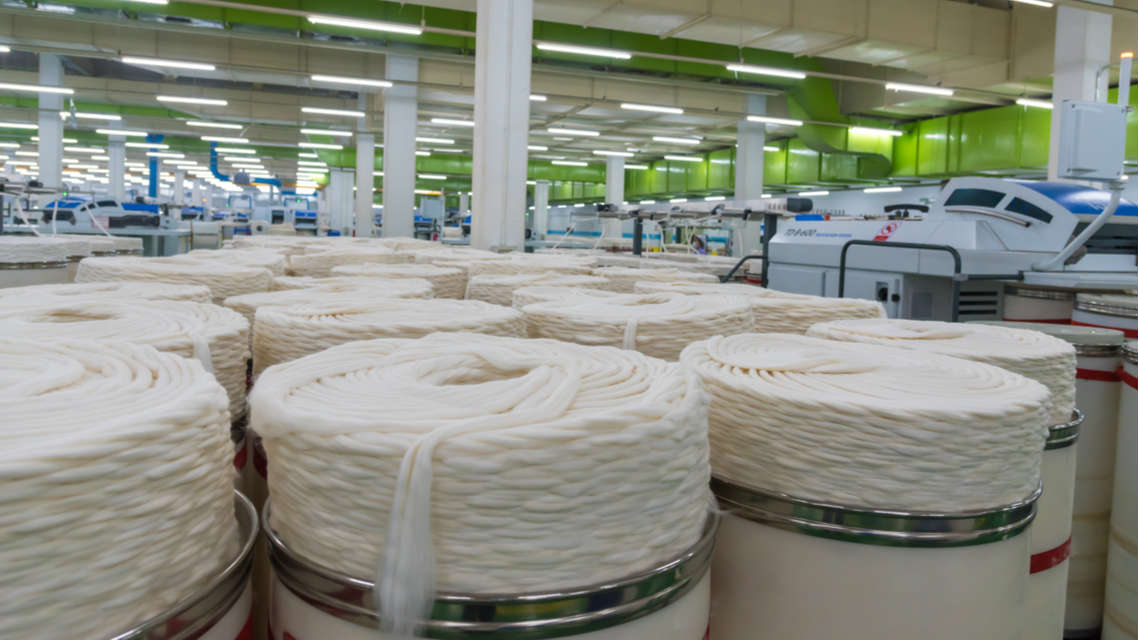
Avec almost 70% of direct garment cost in textile products coming from raw materials, finding the structure that delivers the lowest cost when sourcing textiles and apparel can be challenging. Many mills operate with horizontal integration, and others have taken a vertically integrated approach. Each of the two approaches has pros and cons to importers…
Textile And Apparel Sourcing Challenges in the Global Economy
The shift to the global economy of the last few decades has been dramatic. And although many complex factors have driven this change, it is safe to say that cost has been the key factor in many company’s decisions to import raw materials or to manufacture in low-cost regional markets.
The result has been a shift in both retail and manufacturing trends worldwide. But as the global economic model has matured, it has become apparent that for many industries the shift to offshoring of raw materials, components and finished goods has brought challenges to the “low-cost at all cost” model.
Exploring Vertical VS Horizontal Integration In Textile Mills
Let’s look in more detail at the pros and cons of each type of integration to importers engaged in textile and apparel sourcing.
Vertically Integrated Textile Mills
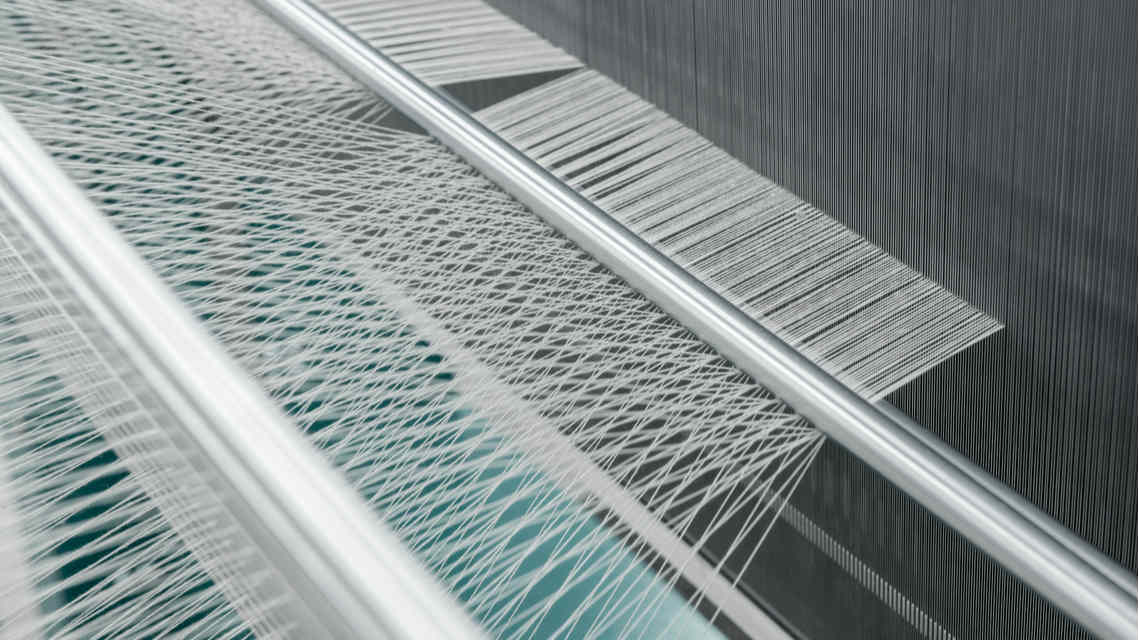
In vertically integrated mills production is managed from start to finish with mills conducting the yarn prep such as carding, drawing and spinning, all the way through weaving/knitting and the dying and finishing of apparel.
This approach provides several advantages and disadvantages:
Pros
- Smoothen the supply chain. The production process is under control of operators and managers qualified and familiar with that company’s products.
- Increase entry barriers for new entrants.
- Time constraints are predictable and therefore can be planned for scheduling.
- Quality can be built into the process to ensure repeatability for quality standards as well as to include quality in the overall cost structure as the product is made rather than a more expensive process of end quality checks after production is finished.
- Compliance issues and sustainability can be controlled in all production phases.
Cons
- Less flexible. As companies strive to supply an economy of scale, the ability to increase or decrease the production of raw materials may be lost.
- Capital investment costs in machinery and equipment are extensive.
- Capacity is fixed, and a large surge in order position can pose production constraints.
- Lot size is less flexible and geared more toward higher volume goods.
- Because capital expense is tied up in acquiring and maintaining equipment, additions of new technology must be reviewed through the lens of short-term ROI.
Horizontally Integrated Textile Mills
In horizontally integrated mills fabric is often purchased in greige form and “prepared for dying” (PFD) fabric is produced by a different entity or by several entities. These fabrics are often delivered to a single center for dying and then sub-contracted out to other converters/finishers for printing or finishing, and may even be sent to an additional vendor for packing.
Pros
- Production requirements can be highly flexible to take advantage of lower cost as well as a sudden expansion or retraction in order position.
- Seasonal or “viral” trends in the market can be responded to quickly with last-minute developments and production for niche or “trending” items.
- A higher degree of innovation.
Cons
- Quality is often not under close enough control for all phases of production.
- Price is often the driving force of raw material acquisition at the expense of quality.
- Compliance and sustainability are not well controlled.
- Traceability and tracking of origin and production lots are difficult.
Risks & Control Issues Related To Horizontal Integration
Horizontal integration can give a company an economy of scale and leverage with vendors and suppliers on price, but it does not address many key issues impacting today’s markets.
This leaves the loop on traceability open and susceptible to vendor and supplier variances in key raw materials and components as the buyer remains focused simply on more market and lower cost without necessarily building stronger vendor compliance and control.
And while control can be established through testing of the final product, the lack of traceability down to the lot can prove more costly, generate more waste and exacerbate compliance and sustainability due to the reactive testing measures that must be taken and the information, such as lot traceability, which may be lost prior to testing.
Some examples of textile and apparel quality issues affected by lack of traceability may include:
- Process variations for raw materials from one vendor to another may affect production quality in the garment manufacturing location where they are consumed.
- Regional and therefore climate-related variations in natural fibers can result in variations in performance characteristics for the same specification of fabric produced by different suppliers. These variations may cause yarn issues such as slubs, twist variations, coarseness and other yarn characteristics which may affect the fabric at the weaving or knitting phase.
- Manmade fibers such as polypropylene may exhibit different characteristics vendor to vendor depending on the percent of reworked material processed through the extrusion process.
- Age of processing equipment and the number of process steps among vendors may lead to like products performing with slightly different characteristics such as temperature or elongation or other properties. For example, a lack of a sanforizing process can result in differential shrinkage, skewing, bow and bias that may manifest itself after cut and sew.
- Shade variation due to the method of manufacture or contamination issues can result in a company’s inability to mix presumably identical materials in production.
How Vertical Integration Succeeds Over Horizontal
In Vertical Integration, the company that owns and controls the factories and sources of material and controls may control other aspects of the supply chain such as logistics and distribution¹.
In this type of integration, the parent company controls all phases of production from the inception of design through raw materials, production, and post-processing.
By possessing this level of control, the company can require traceability for its apparel products from the initial manufacture of raw materials through to the final product. This can help address two very important issues:
- Conformité : Les entreprises du textile et de l'habillement qui ont opté pour l'intégration verticale peuvent intégrer leur conformité dans la chaîne d'approvisionnement du début à la fin. Cela leur permet d'intégrer le coût de la conformité dans le coût de leur produit à tous les niveaux de la production et de la distribution.
- Qualité : Aussi importante que la conformité, la qualité dans les entreprises verticalement intégrées permet des tests et des contrôles de qualité rigoureux tout au long du processus. Comme l'entreprise possède ou contrôle chaque phase de la chaîne de production du produit, la qualité peut être contrôlée et certifiée en toute confiance à chaque étape.
En cas de défaut de qualité, une détection précoce peut réduire le coût de la non-conformité en tant que coût direct et protéger les coûts indirects qui pourraient affecter la marque si le produit avait subi un défaut de qualité sur le terrain, entre les mains du consommateur.
Que faire si votre chaîne d'approvisionnement est intégrée horizontalement ?
Pour les entreprises qui adoptent une approche d'intégration horizontale lorsqu'elles s'approvisionnent en vêtements ou en textiles, il existe des solutions qui peuvent contribuer à réduire les risques et à atténuer les problèmes spécifiques de qualité des produits finis. Les entreprises internationales qui produisent des volumes importants et proposent des gammes de produits diversifiées et étendues ont une plus grande motivation et un intérêt direct à contrôler et à surveiller leur approvisionnement en matières premières afin de maîtriser à la fois la qualité et les coûts.
De nombreuses entreprises de tests de qualité et d'audit, telles que SgTIl existe des outils qui peuvent aider une entreprise à élaborer un plan proactif de gestion des risques liés à l'intégration horizontale de ses matières premières et de sa production. Voici quelques-uns des principaux avantages :
- Audit des usines textiles que la société mère utilise comme fournisseurs de matières premières. Ces audits permettent de comprendre l'organisation globale de la chaîne d'approvisionnement des aspects de la production de niveau 2 et de niveau 1.
- Les usines des fournisseurs peuvent être évaluées à l'aide de ces audits afin de comprendre les capacités de l'usine et d'identifier les domaines de préoccupation et les mesures correctives, soit à l'usine, soit en préparation des livraisons entrantes de l'usine du fournisseur.
- Des plans d'action correctifs et préventifs peuvent être élaborés pour mettre les fournisseurs en conformité dès les premières étapes de la production. Cela permet de préserver l'intégrité de la chaîne d'approvisionnement et de garantir la traçabilité de données essentielles telles que la durabilité et les informations sur les lots.
- Aider les usines, les acheteurs et les marques à comprendre leurs principales forces et à identifier leurs faiblesses.
- Un investissement précoce dans ces plans d'audit, d'évaluation et d'action corrective permettra de réduire les déchets et les défauts de qualité des produits à des stades ultérieurs.
Si le sourcing dans l'économie mondiale restera axé sur les coûts à court terme, l'évolution des dynamiques et des tendances semble indiquer qu'il n'en sera pas toujours ainsi.
Les goûts des consommateurs et les préoccupations croissantes à l'échelle mondiale ont poussé les entreprises intégrées horizontalement à inclure et à investir dans des ressources permettant de tester, de gérer la qualité et de tracer la production de manière adéquate, afin d'améliorer la responsabilité globale.
Votre point de vue...
Comment les coûts de votre chaîne d'approvisionnement vous affectent-ils aujourd'hui ? Êtes-vous aux prises avec une chaîne d'approvisionnement intégrée horizontalement ou votre approvisionnement et votre production sont-ils plus étroitement contrôlés ?
N'hésitez pas à partager vos expériences ou à poser vos questions sur ce sujet en laissant un commentaire ci-dessous. Nous sommes à votre disposition pour vous répondre.
{{cta(‘df2514bd-21b2-4dd1-a2bb-65d0f0235488’)}}
¹ "La mode rapide dans un monde plat : Stratégies d'approvisionnement global"par Barbara Mihm, Université du Wisconsin, International Business and Economics Research Journal, Juin 2010, Volume 9 Numéro 6