Póngase en contacto: enquiry@sgtgroup.net

How Luxury Brands Can Mitigate the Hidden Risks of Fashion Accessories

 
In luxury fashion, accessories are far more than finishing touches — they are signature statements. A chain strap, a piece of custom metal hardware, or an intricately braided detail can define a collection, anchor a brand’s identity, and command a premium price. Yet these very elements are also among the most technically complex components to quality-assure, and when they fail, the consequences extend well beyond a single returned item.
 

The Hidden Risks in Luxury Accessories

The quality risks associated with fashion accessories are often underestimated precisely because they are so specific. Unlike fabric or stitching, accessories combine multiple materials — metals, coatings, leathers, dyes — each reacting differently to heat, humidity, friction, and the cumulative stress of daily use. The failure modes are varied and often difficult to predict:

  • Metal hardware tarnishing, corroding, or oxidizing prematurely, altering the appearance of a piece that was designed to endure.
  • Coatings and galvanization wearing off faster than expected, exposing base metals and undermining the perceived quality of the product.
  • Discoloration at the junction of metal and leather or textile, a particularly common issue in mixed-material designs.
  • Components failing under regular daily use, from clasps and buckles to chains and embellishments.

Each of these failures carries a direct cost: customer returns, warranty claimsy the erosion of brand trust that is so difficult to rebuild in the luxury sector.

The Critical Gap: Standard Testing Falls Short

The deeper challenge for luxury brands is that most standard, off-the-shelf testing protocols were simply not designed to replicate these specific failure modes. Generic industry tests address uniform materials and straightforward wear patterns. They cannot simulate the unique interplay of materials, the precise friction points, or the environmental conditions that a bespoke luxury accessory will face over years of use.
 
When standard tests cannot predict these failures, brands are left with a dangerous blind spot — one that only becomes visible when products reach the consumer and returns begin to mount.
 

Protecting the Icon: A Bespoke Approach to Durability


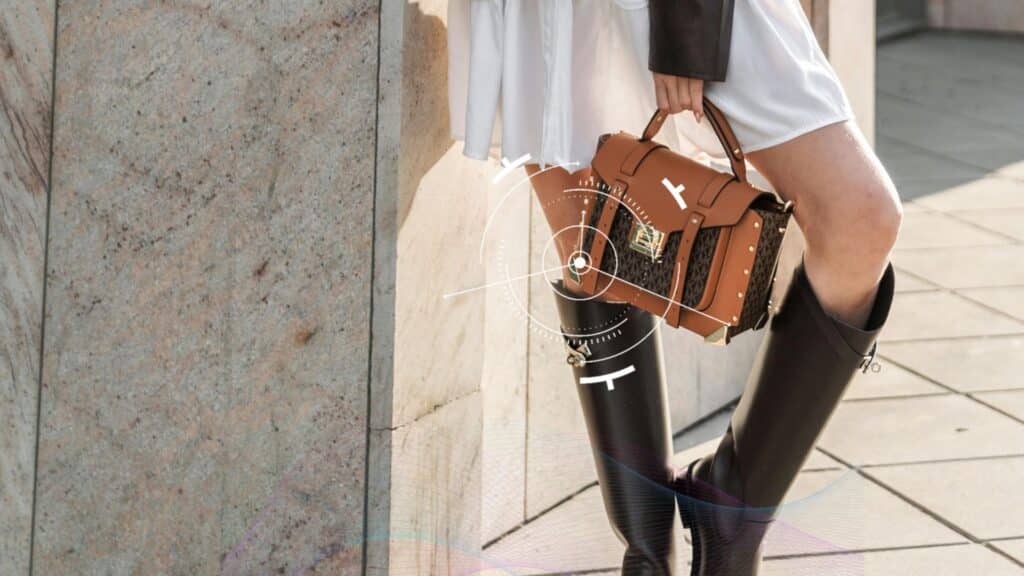
This is precisely the challenge a luxury brand with a rock-signature look — encountered. Their iconic chain and leather braided straps were experiencing metal oxidation and discoloration, driving a high volume of bag returns. After an extensive search, the conclusion was clear: no existing test on the market could accurately replicate the problem.


Rather than accepting this limitation, the brand partnered with SgT to build a solution from scratch. Over six months of close, collaborative development, the teams co-created a fully custom lab protocol capable of simulating two years of daily use on the straps. Every step was calibrated alongside the brand’s own teams — no shortcuts, no compromises.


This is what customer-centric quality assurance looks like in practice: not applying a generic solution, but engineering one that is as unique as the product it is designed to protect.

Conclusion: Is Your Accessory Quality Assurance Keeping Up?

As luxury designs grow more complex and consumer expectations continue to rise, the gap between standard testing and what is truly required to protect a luxury accessory will only widen. The brands that will lead are those that treat quality assurance not as a checkbox, but as a strategic, custom-engineered capability built in partnership with experts who understand the full complexity of their products.
When standard solutions fall short, the answer is tailored testing — built together with the brand.